My Life in Languedoc #3- A Memoir in Chapters
Updated: Aug 5

A Luna Landscape
John and Nicole are the owners of a small organic winery in the Minervois called Close du Gravillas. They were two of the first people I met when I was searching for wineries for my tours. I was drawn to their pioneering spirit, driven by a passionate desire to make the best Languedoc wine possible.
Nicole is a true Occitanne, born in the Roman city of Narbonne whereas John hails from the plains of Kentucky where bourbon is the drink of choice. They met at a party when John was living in Paris and had gone to Narbonne with his boss for the weekend. They fell in love and eventually John made his home in Languedoc and somewhere along the way Nicole got the winemaking bug. I’m pretty certain, being a vigneron had never been in Johns sights and for Nicole, the closest she’d come to wine, apart from drinking it, was a job in the export office of a winery.
Chasing her dream Nicole went off to college to learn how to make wine. It wasn’t a highfaluting oenology school, more like a 6-month course at the local agriculture college where alongside learning how to ferment juice, she was taught to plough and fix the tractor. Pricing wine and earning enough money to live on was an important part of the curriculum. This was about twenty-five years ago and at that time people looked down their noses at Languedoc wine. It was seen as low quality, cheap plonk and Nicole was told she’d need a minimum of fifteen hectare to produce enough wine to make a living because of the low prices.
Towards the end of the course students were encouraged to find work experience jobs and Nicole was lucky enough to find a placement with a highly regarded winemaker based close to Montpellier. Later she would also secure another work placement in Burgundy. She had no way of knowing that these choices would have far reaching consequences and strongly steer her wine making career. This was mainly because these wineries had something in common - limestone soils which influenced everything she did from then on.
Because of the hot climate in Languedoc and the Cotes du Rhône, these regions are known for making powerful red wines that are spicy and peppery with high alcohol levels. Nicole didn’t want to make those styles of wine, she was seeking elegance, freshness and complexity, not a big clout of hot fruit. During her work experience she became convinced that limestone soils would help her achieve this and if she could combine them with altitude, to help mitigate the southern heat, she thought she would be onto a winner.
There is a lot of limestone in Languedoc but not much altitude. The best option was to head to the high Minervois, to the village of Saint-Jean-de-Minervois that sits on a limestone plateau at about 300m. The village is famous for its sweet muscat and not for the refined red wines Nicole dreamt of making. It’s a small settlement of just forty-nine residents at last count, of which seven were wine makers. All of them thought her a bit odd, coming to the land of Muscat to make red wine. They also dubbed her the ‘Americain’, it sort of summed up her foreignness and strange ideas. Unable to find a winery to buy, they bought what had once been an old-people’s home on the edge of the village. It was painted a garish pink and was ripe for renovation, plus it had an old stable they could convert into their winery. Next, they set about buying land – not much, only six hectares on which they planted the red varieties Nicole believed she needed.
It takes at least three years for new plantings to become established but much longer for them to reach the kind of maturity that produces grapes fit for making a fine wine. Nicole and John needed something to do until that day came, so decided to buy a plot of land that was already planted to vines and found what they were looking for in a nearby hamlet. The vineyard included a block of pink Grenache (Grenache Gris) on one side and a block of Carignan on the other. The vines were ancient with the Carignan being planted in 1911 – over 100 years old..! They were slightly reluctant to buy the Carignan because in those days no one believed it capable of producing good wine, but it would help them practise their wine making skills, so they went ahead.
Being inexperienced they thought they’d make a rosé from the pink Grenache but the problem with that idea is Grenache has a tendency to be high in alcohol which isn’t what you want with a quaffing wine. Sure enough, when it came time to pick, the potential alcohol was 14% so they decided to make a white instead which is pretty easily done with pink grapes, you just don’t use the skins as that’s where the colour resides. Nicole also chose to ferment in large oak barrels. Not because she wanted the wine to be oaky but because she liked the roundness and complexity barrels transmit to wine. The Carignan was fermented in stainless steel tanks but matured in similar large oak barrels and because in both cases they wanted the wine to taste of the place where it grew, they used the wild yeast living on the grape skins to carry out the fermentation.
That first vintage went well. The wines finished fermenting on time and then spent some months maturing in the barrels until the day came when John and Nicole would taste their first finished wine.
Now, you know how it is with your children. They are the prettiest, the most handsome, the most clever, the most gifted of any children you’ve ever met. This is because they are yours and you are naturally inclined to be proud and perhaps a little blind. Well, the same can be said of the wine you make and when John and Nicole tasted theirs, they were blown away by how wonderful it was. But were they right? They realised they may just be in love with their ‘children’ and knew they should get an opinion from someone reliable. Nicole trusted the guy near Montpellier, the one she’d done the work experience for, so decided to take her wines to him for an expert verdict.
He tasted the white first and while Nicole held her breath his eyes fixed on hers and she saw them fill with incredulity.
‘You made this? From pink Grenache?’ He asked, his voice high with amazement.
Nicole nodded, swallowed hard and waited for him to voice his judgement. When it came, it confirmed she had indeed created an incredible wine, one that few people believed Languedoc was capable of. Nicole had been right to make white wine from the pink grapes and her selection of large Austrian oak barrels, that impart much less oak flavour than French ones, was part of the key to the quality. However, I think it should be recognised how important her natural impulses were. She used her instincts to decide when to pick, how to ferment and how much intervention (very little, just careful monitoring) to use. Perhaps only a woman’s instinct would have led to the creation of this wine. Its elegant but rich, bone dry yet luscious and mesmerizingly complex. The limestone and the altitude have played their part beautifully, endowing it with minerality and cool clarity.
This wine, once destined to be a simple rosé, was such an unexpected triumph that she felt she needed to give it a name that hinted at how it had been conjured. She christened it L’Inattendu, The Unexpected.
Next was the turn of the Carignan and it had a big act to follow. Had Nicole taken a humble grape variety and produced another fine wine? She had. However, she refused to take the credit, putting it down to the age of the vines but allowed that perhaps her preparedness to wait for the right moment to pick, might have had something to do with it. If there was one thing Nicole knew about Carignan, it was that it’s a late ripener. If you pick it too soon you could end up with a green and stalky wine with rustic tannins. The reluctance of some wine makers to wait may be one of the reasons wine made from this grape is maligned. Many baulk at the idea of waiting, fearing autumn rain might spoil the harvest but it was a gamble that Nicole chose to take rather than make an inferior wine.
When it came to naming this wine Nicole wanted to reflect the influence the age of the vines had had so chose to christen it Lo-Viehl which, in the old Occitan language means ‘The Old One’.
L’Inattendu is still my favourite Languedoc white as it is with some sommeliers, and the wine is now sold in many of the best restaurants in Paris, London and New York. Lo Viehl helped put old vine Carignan on the map as did John’s superb marketing skills. This couple not only made a loving marriage they became successful business partners. Nicole brings to the mix her wine making skills, thoughtfulness and instinct and John the ability to talk to the world in English with a personality that opens doors. He’s not a bad tractor driver either..!
Much of my success is because of these two wonderful people who I am proud to call my friends. John and Nicole’s story fascinated hundreds of my customers over the years. They loved tasting the wines Nicole and John hadn’t come here to make, then later, when the vines they’d planted in the early days reached maturity, we were able to taste the elegant red wines Nicole had dreamed of making all those years ago.
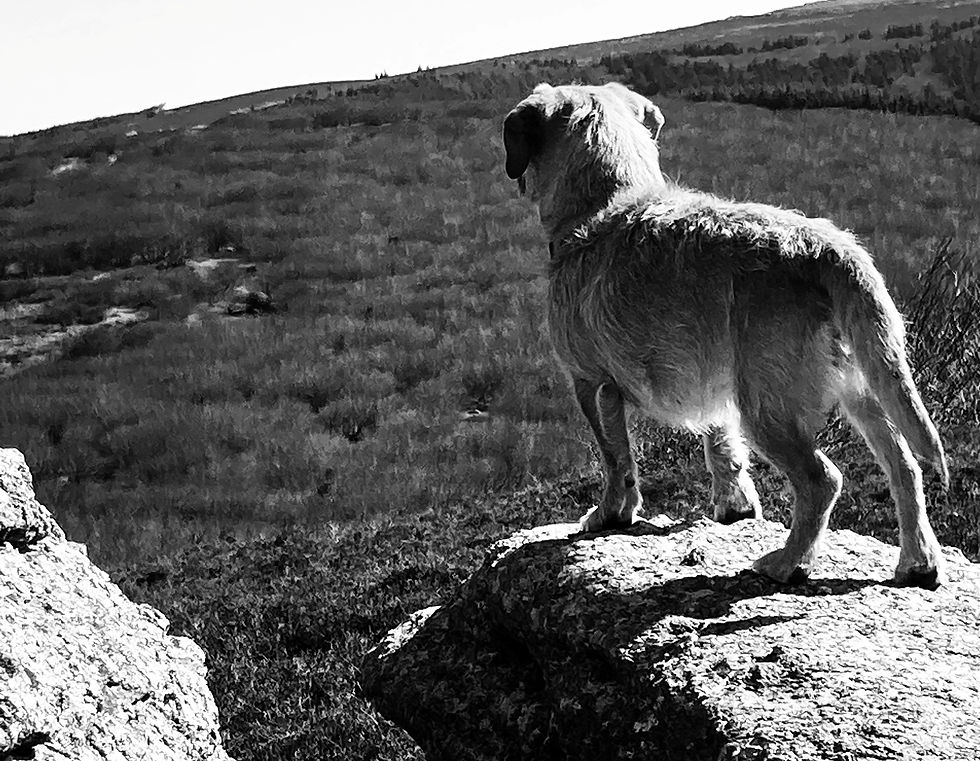
As well as enjoying a visit to a small organic winery, my customers loved the drive onto the limestone plateau where they stared at the limestone rocks and wandered at the ability of the vines to grow on such a Luna landscape.



Comments