A Great Victory
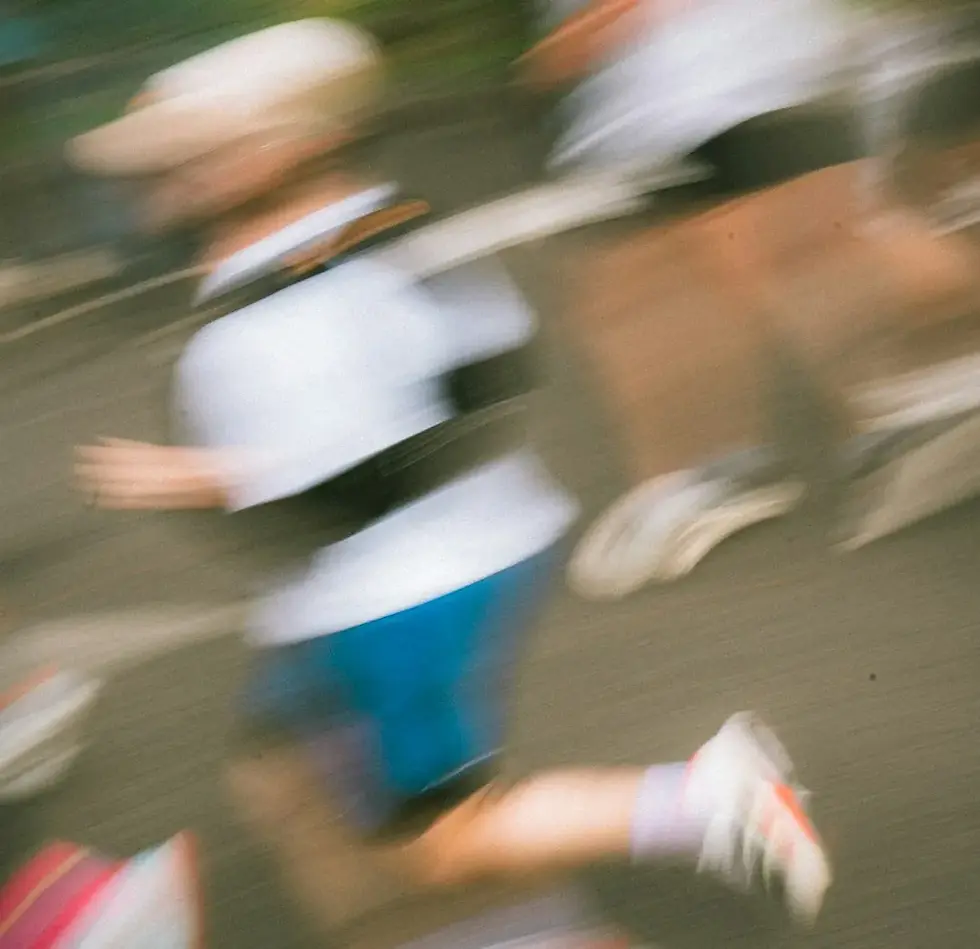
Christopher had heard stories of his father’s athletic prowess all his life so maybe it was the fear of failure that had caused him to lose the race. He’d ran until his lungs burned like raw fire, his small legs pumping as hard as they could.
But now holding the hefty flat disc of bronze disappointment weighed far heavier.
That morning he’d said to his mother, ‘It’s sport day, are you coming to watch me?’
He’d been stood by the kitchen table, clutching the leather satchel that he’d already packed with his sports kit. The stark black shorts, the soft white Aertex shirt with the blue school emblem embroidered over the pocket, and his black plimsolls.
His mother hadn’t looked up from her magazine as she tapped the end of her cigarette against the rim of a heavy onyx ashtray. A fine cloud of grey ash settled on the polished mahogany table.
‘Oh. Is that today?’ she murmured, turning a glossy page. ‘No, darling, I can’t. I’m playing bridge.’
From the end of the table, his father wiped his lips with a linen napkin and stood up. He smoothed his suit jacket, adjusted his tie, and stepped over to his son. Christopher immediately straightened his posture and extended his right hand which his father took, giving it a single, firm squeeze.
‘Good luck today, Christopher, I hope to hear about a fine victory tonight.’
‘Yes sir.’
His father had lent down to plant a brief, cool kiss on his wife’s cheek before retrieving his bowler hat from the stand then left the house, the heavy oak front door clicking shut behind him, as precise and predictable the grandfather clock standing in the hall.
That brief ritual was nearly all Christopher ever saw of his father on weekdays, save for the dreaded weekly interrogation in the study on Friday evenings, where he was expected to account for his academic triumphs. On weekends, his father vanished into the misty expanse of the golf course or the quiet sanctuary of his club. If his parents went out on Saturday evenings, Mrs. Bleasdale came to watch over him. Christopher secretly cherished those nights. Mrs. Bleasdale toasted hot buttered crumpets by the fire and let him stay up past his bedtime, cheering him on as they moved bright wooden houses around the Monopoly board.
As usual that morning, his mother had driven him to school in the Rover. It always smelled of leather and cigarette smoke which made his tummy churn. She drove with practiced precision but always with a cigarette in her right hand, rarely opening the window.
‘I’m in the running race, Mother,’ Christopher blurted out as the car left the drive but the moment the words had escaped him, he wished he could reel them in like a fish on a line.
‘Well,’ his mother said, her eyes fixed on the road ahead. ‘You know we expect good things from you. Your father was champion at his school in everything he did.’
But he’d let them and himself down.
On the way to school they’d picked up his friend David. When the Rover pulled up outside the Carpenters' terraced house, David and his father were kicking an old leather football around the patch of front lawn. David’s mother was stood on the porch in a faded floral apron, watching them with a wide, easy smile.
When David ran to the porch to say goodbye, his mother had gathered him up in a tight, loving hug, pressing a warm kiss to his forehead. Then David’s father had walked up, casually wrapping an arm around his wife's waist. They stood shoulder-to-shoulder, beaming at the car.
Sitting in the back seat, Christopher had watched through the glass. He wondered what a hug felt like, or a kiss, he couldn't remember ever being kissed.
David had scrambled into the car, breathless and glowing. ‘Thank you for the lift, Mrs. Smythe!’
‘You're welcome, David,’ she had replied, glancing into the rear-view mirror. ‘Is your father not working today?’
‘Dad hasn’t got a job at the moment, but it’s great! I get to spend lots of time with him.’
Christophers mother let out a sharp, delicate little sniff, her universal mark of silent disapproval. Christopher had looked back out of the rear window as they pulled away, watching David’s parents still standing close together, waving until the car rounded the corner.
Later, after the races and when it was all over, Christophers mother came to collect him. He was sitting on the wall by the school gates, head lowered looking at the medal he’d been awarded. Third place. As she pulled the Rover into the carpark, he quickly poked it back into its small vinyl pouch then shoved it deep into his trouser pocket. He sniffed hard and bit his lower lip until it hurt, desperate to stop the trembling before she noticed. As she got out of the car a muffled, choked sob slipped out, and he immediately clamped his hand over his mouth. He knew he mustn't show his mother up in public.
He needn't have worried. She wasn't looking at him. She rarely did.
Across the field, David Carpenter waved his arms wildly. ‘Chris! Hey, Chris!’
Christopher froze, snapped his gaze away, and pretended to inspect the grass near his shoes. If David came over, he would talk about the race, he might say something about his getting third place and he didn’t want his mother to know, not yet. The thought tasted like sour milk.
Panic flared in his chest as he saw David jogging toward them. He jumped off the wall and ran to intercept his mother catching hold of her hand and turning her back towards the car.
They’d nearly reached it when his mother paused to exchange pleasantries with another parent. Christopher’s heart hammered against his ribs like a trapped bird. He pressed his knuckles into his thighs, praying the woman wouldn’t mention the race. After an agonizing moment, his mother bade the woman farewell and opened the rear door of the car for him to climb in.
He scrambled into the back seat, sliding all the way across the crinkled leather until he was positioned directly behind the front passenger seat, safely outside his mothers sight in the mirror. He pressed his face toward the window, wiping furiously at the wet streaks on his cheeks and felt relief when the engine purred to life, and the Rover glided onto the main road.
On the radio, a crackling American voice was broadcasting breaking news that President Kennedy had been assassinated. His mother gasped loudly, her hands tightening on the steering wheel as she leaned slightly forward, completely transfixed by the voice on the airwaves.
Christopher looked up into the rear-view mirror. Her eyes were locked onto the road, her mind entirely consumed by the radio.
Slowly, silently, he reached down to the chrome window winder on the door panel.
He turned it a fraction of an inch. Then another.
A tiny whisper of air rushed into the car, fluttering the pale fringe of his blonde hair.
He darted his eyes back up to the mirror.
Nothing. She hadn't noticed.
Strict rules governed his life: never touch the door handles, never touch the glass, never make a sound when Mother was listening to the wireless. Disobedience made dark things happen. It brought the small, suffocating cupboard under the stairs, where the air grew thick and his tears turned to desperate pleas. It brought the cold hunger of going to bed without tea, his stomach growling like a wild animal. And sometimes it brought stinging red welts on his skin that made sitting down excruciating.
And the next day, they would act as if none of it had ever happened.
Christopher was practised at pretending things hadn't happened.
He reached into his pocket and slid the cold bronze medal out of its pouch. He looked down at the dull metal in his palm. Third Place.
He turned his hand, sliding his fingers through the narrow slit of the open window.
He opened his grip.
The medal slipped into the rush of wind, striking the tarmac with an unheard clatter before tumbling out of sight into the roadside grass.
Christopher smoothly rewound the window until the rubber seal clicked tight. He straightened his back, smoothed the front of his Aertex shirt, and carefully adjusted the blue emblem over his heart.
He hadn't come third.
The bronze medal didn't exist.
He had won.
That’s what he would tell them at the dinner table tonight. And as the Rover swept smoothly along the avenues to home, for Christopher this quiet conviction felt like a great victory.


Comments